
Nigeria's Place in Africa's Democratic Growth:
Striving to be a More Perfect Union
Keynote Address
By
Ambassador (Dr.)
Robin Renee Sanders
CEO-FEEEDS Advocacy Initiative and former United States
Ambassador to Nigeria, ECOWAS, Republic of Congo, and Director for Africa
National Security Council at the White House
May 26, 2015, Port
Harcourt, River State
Every now and again there are
hallmarks, legacy moments, and periods of time in a country's history. . .in a country's future, in a country's ability
to change and grow. I would argue that this is one of those times in Nigeria --
as a result of your recent elections, and as you embark on a historic, peaceful
handover of power to a new set of leaders on May 29, 2015.
You had a seismic shift in your
political landscape and your political future in 2015, which has proffered two
things:
· It has proven the naysayers and doubters who thought Nigeria could not
have credible elections wrong, not once but twice – as your 2011 and your 2015 elections
more than met international observer standards; and,
· The 2015 election moved Nigeria into a different “league of nations” not
just for Africa, but on the world stage.
I made remarks in Washington in both
2011 and early 2015 highlighting two things I know about Nigeria and Nigerians –
do not underestimate their "Resilience and Resolve" [I call these the
two R's] to get it right despite the range of challenges betwixt and between. I have
always marveled at these two elements which are fundamental to Nigeria's
national character.
Granted, despite these two R's [resolve
and resilience], we all recognize that there are headwinds…challenges [which
you know better than I] in the road ahead as the nation seeks to move forward
on development, but equally important, will be to heal political wounds and
move past any remaining animosities from the election period. The future
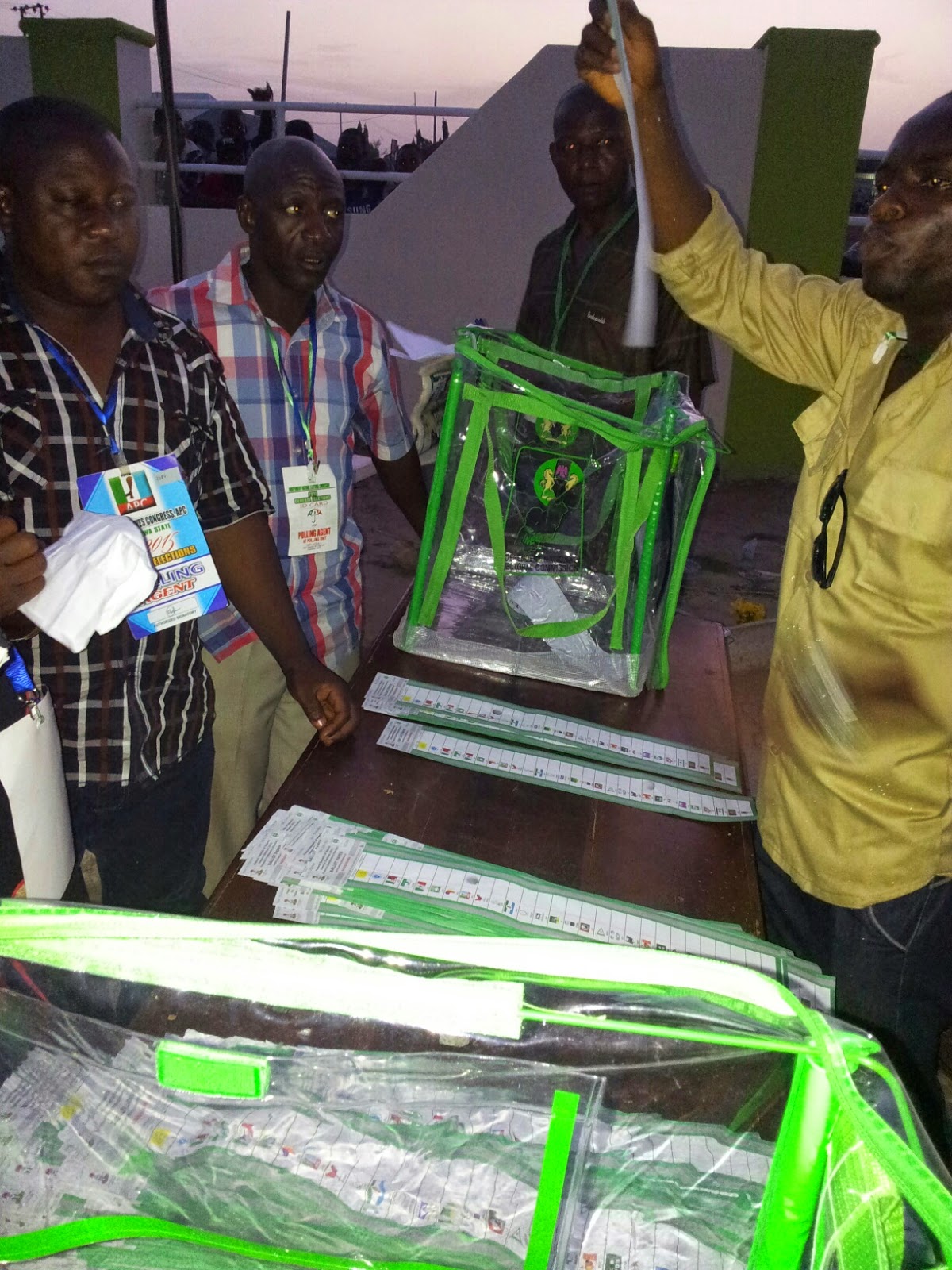
well-being of the nation should be at the top of everyone's to-do list.It was clear with the 2015 election that the Nigerian voter wanted a transparent process. You had that albeit with some irregularities and incidents of violence; but, none, as declared, which fundamentally affected the outcome of the national process.
I wrote after the election that I thought INEC Chairman Jega was Nobel Peace Prize-worthy, and that the Nigerian voters were the super heroes of ensuring that your national elections were both democratic and transparent. May no one ever again question your ability to do so?
So what is next for the Continent's giant?
The President–elect and his team have already outlined "The Buhari Doctrine" turning the mandate, as desired by
the Nigerian people, into his top policy priorities – addressing security,
corruption, economic issues, energy/fuel needs, and poverty through education
and job/entrepreneurial opportunities. But, the watch words now are "patience
and support" from both the voter and the international community to
provide time to fix, correct, and improve all of the elements outlined in
"The Buhari Doctrine" to address the current challenges. The
President-elect has asked for this; we all need to support him and his team thus
so.
None of what I just said is new. It is
all known. So what is the message for today? What does all this democratic, national, political
change mean for Nigeria, moreover for the Continent? It is – by far and clearly one key thing -- an Opportunity -- an opportunity to fundamentally change the paradigm of Nigeria's political future; to fundamentally change your leadership role on the Continent, and to speak with authority about not only how things should be, but how things can be.
You are an independent sovereign nation, and nothing I say here changes that. You will make you own decisions as a nation, as Nigerians.
So my broader message is in my
philosophy about democracy and
democracies. I want to
share that with you as it might be useful at this important juncture in your
history, but more specifically to address the two-part theme of this
anniversary celebration in honor for His Excellency, Governor Amaechi -- Deepening
Democracy in Nigeria- Implications for Development in Africa. So I will address the themes as
such as I share my philosophy about democracy and where it comes from for me.
Deepening Democracy In Nigeria: What
is Nigeria's Democratic Philosophy?
Fundamentally, many countries have a
philosophy of what they want their democracy to be like, to look like. For
Nigeria what are those elements, what is the Democratic philosophy you are going to build into your
national character to take advantage this historic political paradigm shift?
The most important democratic phrases
to me which have driven my beliefs in both my personal and professional life on
democratic processes just so happen to be in the Preamble of United States
Constitution. For other Americans it may come from Bill of Rights, other
historical or contemporary documents of America. But for me, it comes from the
Preamble, the phrases are:
· "In Order to Form a More Perfect Union;" and,
· "We the People."
I believe in these phrases, even
though, at times we have had challenges in the US as a nation, but I truly
think it is important to have a democratic philosophy to live by, and upon
which to judge yourself and your nation. I am probably inspired by these words more
so because I am an African-American and because of the history of African
Americans in the U.S. from slavery to today. We, as well as other groups in the
US, have faced diversity issues and exclusion throughout times in our history,
and we still face some of these challenges today as a nation -- as evident by recent
events in Ferguson, Missouri and Baltimore, Maryland this year. But for me,
these challenges further underscore how critical having a democratic philosophy
can be for a nation: it serves as a compass
in both good times, and bad.
Striving to be a More Perfect Union
Let me highlight the applicability of the first phrase [In Order to Form
a More Perfect Union] and what that means to me and for me. These are just
examples and as Nigerians you will need to decide from this New Dispensation which starts on May 29,
2015 – what your new democratic philosophy will be; how you will deepen it; and,
moreover describe it. I have read your Constitution many, many times since I
first came to Nigeria in 2008; so your democratic philosophy might come from there
or elsewhere from your many inspirational writers.
Nigeria has turned a page already toward a more perfect union; a more
perfect federal republic; a more perfect Nigeria. This is part of the
democratic deepening called for by the lecture’s theme today and by your
historic election, and transition.
Your election has made the world sit up and pay attention and
from this point forward you are a role model for the Continent. Don't lose
that, build on it, cherish it…embrace it.
We the people
This brings me to the second phrase I
hold on to as part of my democratic philosophy – We the people – which actually are the very first three words of
the Preamble. I am intentionally addressing these three words last as they inspire
me more than any others, and provide me my compass about the role of democracy.
The same precepts apply as I noted
above – Nigeria will have to determine the elements of its democratic
philosophy to truly "deepen" this New
Dispensation.
The reason I am sharing my very personal thoughts with you about what
these three words -- "We the People," – can mean is they underscore
that any nation – yours, mine, your
country neighbors, your colleague African nations, your allies, and your nation-partners,
your nation-friends – any that consider themselves in the league of democracies
in both practice and spirit must not only include, but see and respect all of
its nationals, no matter where they live or from what region or ethnic group
they are from.
A Nigerian philosophy of "we the
people," would mean everyone has an opportunity not to live in poverty or
fear, everyone who is a Nigerian is respected as such, and honored as such. It
needs to means that everyone along the political spectrum, providing you are
not intent on harm, human rights violations, or abuse, has a voice because
democracies are also not about one voice, but many…in a word "inclusiveness" -- all
political parties and ethnic groups, women, youth, all religions, the disabled,
civil society, the media – albeit participating fairly, constructively,
transparently, and honestly.
"We the People, in Order to Form a More Perfect Union," is the
full weight of that first phrase in the Preamble of the U.S. Constitution, and
its represents the vehicles that help me keep my moral, professional and
personal compass. But I also believe philosophies like that have helped America
deepen its democracy, even when we stumbled…and we have stumbled from time to
time.
The Continent is looking up to you as
the standard on both elections and, even more so, on transitions. Your
leadership in both deed and philosophy will be even more important as a marker
of progress not just domestically but for Africa. You have a great start; remember
mature democracies have two things as regards to elections when a change in
political power takes place:
·
A statesman-like concession, as you had from President Jonathan;
·
The grace and leadership of Mr. President-elect Buhari as the victor taking
the helm.
Nigeria
had both those things.
Implications for Development in
Africa
Moving on to the second part in today's
theme -- Implications for Development in Africa – ostensibly means what are the development expectations
for Nigeria coming out of this election: what they will be on May 30, 2015; the
first 100 days, and the first year. Those will be set by Mr. President-elect
and his team and he has already mentioned many of those things in the run-up to
the handover. The international community, particularly friends like the United
States, the UK, China and others will need to be helpful, supportive, and good
partners to Nigeria at this time. The importance of Nigeria to the U.S. has
always been there. That being said, you already know that Secretary of State
John Kerry will lead the U.S. Delegation, which further underscores not just
the friendship between our two nations, but how significant your election and the
peaceful transition are as positive messages about Nigeria and the African
Continent.
You know the positives already in
terms of your nation, but let's quickly recap:
You are now the largest African economy; the fourth
largest populated country in the world[i]; singularly you have
the world's largest number of mobile phones at 100 million – important for
business and education; you are right now the best-practice example of an African
election; the premier Africa investment destination; your 30 million middle
class [ii]members
grow daily; and you have improved access to capital/financial inclusion by 44 percent[iii]. Your leadership in international arenas such as the
African Union, in ECOWAS, potentially also at the helm of the African
Development Bank, and in New York, you have called for a permanent UNSC seat
for Africa -- are all actions of which to be proud.
However, the list of challenges here is a lot longer, and
the suffering of the everyday Nigerian is high. Thus, with this new
Dispensation and good news also comes the responsibility to "lean
forward" more vigorously to address development:
· Improving security
in the North;
· Combating corruption;
· Reducing poverty, as most Nigerians live on naira 290 a
day ($1.25), representing about 60 per cent of your population[iv],
with the same number of people facing daily food security issues;
·
Addressing education such as having
the world's largest number of school-aged children [10 million]not in school; particularly since children under 15
make up 44 per cent of your overall population, and 39 per cent of Nigerian adults
cannot read or write;[v]
· Improving health systems and
providing affordable housing to the 17
million people in Nigeria without good shelter is critical;[vi]
· Expanding the number of Nigerian Small
and Medium Size Enterprises (SMEs) from its current 17 million;[vii]
· Creating 1.8 million jobs per year from
your current 1.2 million just to outpace poverty and keep pace with your
population growth;[viii]
· Securing energy-fuel needs, including rural electrification, remain one
of your most press needs not only for daily living but for your private sector
and investors; and an
· Additional focus needs to be on women and at-risk girls from education to
financial inclusion as they both lag behind here on all human index well-being
indicators.
Changing any of these issues to the
positive side of the ledger will further underscore Nigeria's leadership role
on the Continent.
In sum, a new paradigm begins for your nation
on May 29, 2015, and Nigerians should be very proud of the example they are
setting for Africa and for evolving democracies all over the world. I want to
again congratulate Governor Amaechi for his leadership in holding such an
important symposium at the dawn of the changing of the political guard in
Nigeria.
As I close my remarks, I am extremely
proud of Nigeria and have always been in the pro-Nigeria corner way before it
became fashionable to be so. I am appreciative of having represented the U.S.
Government here, honored to have served as an observer in your 2015 historic,
democratic elections, and to be asked to speak here today. I wish the Governor,
people of Rivers State, the nation, the outgoing President, and most assuredly President-elect
Buhari and Vice-President elect Osinbajo the very best as they lead Nigeria
during this landmark period in Nigeria's history.
I Thank you.
[ii]
Source for SME & job figures: Sept
24, 2014, McKinsey Breakfast on Nigeria, The New York Palace Hotel, New York
[vi] Source for SME & job figures: Sept 24, 2014, McKinsey Breakfast on
Nigeria, The New York Palace Hotel, New York
[vii] Source for SME & job figures: Sept 24, 2014, McKinsey Breakfast on
Nigeria, The New York Palace Hotel, New York
[viii]
Source for SME & job figures: Sept 24, 2014, McKinsey Breakfast on
Nigeria, The New York Palace Hotel, New York




%2Blistening%2Bto%2BWomen%2BVoters%2BEager%2Bto%2BVote%2C%2BMany%2Bfirst%2Btimers.jpg)

