Showing posts with label Africa development. Show all posts

Thursday, August 26, 2021

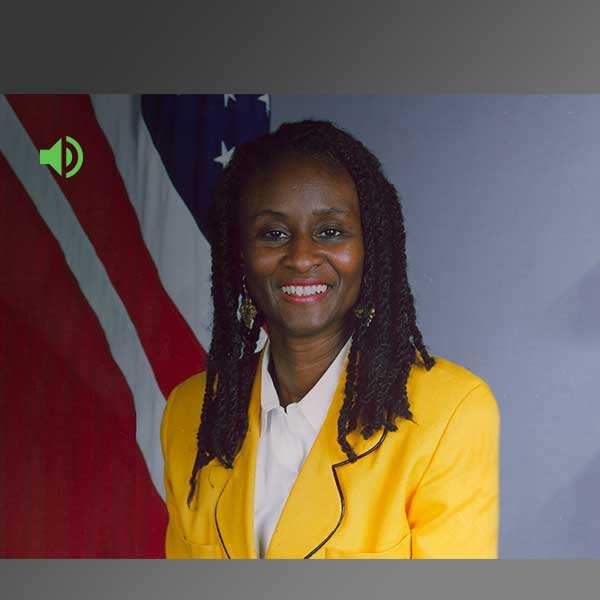
Amb. Sanders on "The Gallup Podcast" on Africa Development Issues, Noting Key Role of African Women & Youth


Ambassador Sanders discusses a 
variety of Africa development 
issues with Gallup's 
Mohamed Younis on 
"The Gallup Podcast." 

In the podcast, Sanders
highlights the 
importance and linkages of 
data-policy-dialogue to 
concretely understand and 
improve life-quality and 
development for Africa, especially for 
Africa's women, who are the backbone 
of the Continent in many ways.

She also stressed the key role of the
Continent's large youth bulge of current
and future leaders, in a range of areas from
entrepreneurship to social enterprise to fintech,  
civil society, education, and in the agriculture and health 
sectors: https://bit.ly/Sanders-AfricaGallupPodcast 

For more research data on key Africa development issues, including data on how women and Africa's young people feel about important sectors from education to health, and housing to whether their country is a good place to start a small business or if they feel secure or are concerned about their well-being, including whether they believe they are "thriving," or not, see this year's 2021-2020 @theFEEEDS Research and Data Indices: 


A FEEEDS Series Blogspot


Saturday, February 6, 2021

Dr. Sanders Speaks on Africa's Path to Globalization on Panel with Afrexim's Chief Economist Dr. Fofack

As an advocate of key development issues and linking SDGs with ESGs, Sanders addresses Africa's Path to Globalization in the joint Brookings-Thunderbird Global Dialogue Series. Dr. Sanders' contribution to the discussion will focus on Building on AfCTA, SMEs, Women & 4IR are Africa's Keys to Globalization. https://zoom.us/webinar/register/WN_Rq22pQpSSn-Y6uKag3aW_A


Register here: https://zoom.us/webinar/register/WN_Rq22pQpSSn-Y6uKag3aW_A

A FEEEDS Series Blogspot


Thursday, October 29, 2020

Ambassador Sanders Keynotes Launch of New Africa Diaspora SME Trade & E-Commerce App "Kuueza"


In the recent launch of a new app, Kuueza," focused on US-Africa Diaspora Trade, Ambassador Sanders highlighted in her keynote the importance of both innovation and technology by small businesses in the Continent's development. 

Long having been an advocate for Africa small and micro businesses as well as technology uses since the mid-2000s, Dr. Sanders, who hold a doctorate of science degree in Information Systems, and Communications, noted that traditional sectors like manufacturing and agriculture are key and ripe for innnovation. It is likely, she said, that the most innovative ideas and technology uses will be add in the service sector.  

Finding and addressing local gaps in services and having stronger enabling environments, policy support and financing opportunities ,will be bedrock issues for many new Africa-based and Diaspora businesses coming onling in the next 5-10 years.  Furthermore creating new science and technology-based responses to healthcare, pandemics, and education and/or artificially-driven (AI & AR) or enhanced new and cutting-edge equipment, uses, and tools in these areas will also be key for the Continent's economic development.   


 A FEEEDS Series Blogspot

Friday, October 16, 2020

New Gallup-Lloyd’s Register Poll: Highlights Africa’s Worries & Risks -- Climate Change & Risk of Harm are Top Concerns

 Published first on Allafrica.comhttps://allafrica.com/stories/202010141124.html

                   Africa's Worries & Risks: Implications for US-Africa Policy & Development

By 

Dr. Robin Renee Sanders 

The world renown Gallup Poll in partnership with Lloyd’s Register Foundation released their new Worry, Experience Harm/Risk & Government Safety Performance Index (GSPI) indices as part of their World Risk Poll, which covers some 142 countries, of which 39 were African nations. The polling done in local languages with males and females participants aged 15 years and above, highlights the worries, harm or risks of those who were surveyed. The World Risk Poll (and its three indices)– is set to repeat four times over the next six years – with compiling for the 2021 questionnaire already under way. It is likely that the next installation of the poll (and its three indices) will show even starker reactions on these overarching themes of worry, harm or risk as a result of the world having been under a full year by then, and likely more, of COVID-19.

Some of the specific themes included in the three indices of  Worry, Experience Harm/Risk & GSPI,  focused on a range of climate change issues from severe weather to food security and, food and water safety; violence, crime, and conflict; safety and harassment in the workplace (particularly against women); infrastructural challenges, online threats; the role and impact of future technologies uses (e.g. artificial intelligence, etc.) on their lives; and, whether or not people trust their government.   

Why the Indices are Important & What They Say:  

Many of the above themes are important for review by national governments, foreign policy makers, national security leaders, development donors, and are, in some ways, key elements within the United Nation’s (UN) Sustainable Development Goals (SDGs). Thus the Worry, Experience Harm/Risk & GSPI indices are important tools for those working in these areas, because so much attention, focus and money over the last two decades have gone toward and continues to go toward (as it should),  tackling global poverty and conflict as well as seeking to make people feel safe. This includes improving quality of life, encouraging democracy and human rights; and, providing assistance to climate sensitive environments (although the U.S. certainly has not done its part on climate change in the last 18 months or more).  Thus, the responses in these three indices demonstrate that despite a lot of work and commitment on many of these goals, people are not necessarily feeling safe from harm or risks, and that “moving the needle,” could be even more challenging than previously anticipated, requiring more adjustments in strategic planning, policy, and resources than foreseen. This is especially daunting for regions like Africa, Latin America, and Southeast Asia. We already know that according to the World Bank’s October 8, 2020 Report that COVID-19 alone will push another 40-50 million people around the world into poverty on top of the 2019 prior pandemic figure of 736 million. COVID erases nearly five years of development work, and pretty much wipes out a lot of the progress made under the UN SDGs, with SSAfrica and Asia being the hardest hit, followed closely by countries like Brazil.          

Understandably worry and experiencing harm or risk, and their attendant issues of fear and uncertainty, are tough things to measure, but these new indices do a very good job of putting the data into a global perspective. Further, it is clear that many of the responses by those living in SSAfrica were connected to climate change issues; internal social sector uncertainties in their own countries; conflict and infrastructural issues; and, negative reactions connected to online bullying, fraud, validity of information (fake news) and related cybercrimes. It was good to see that the economic impact and development benefits of new technologies usage, such as artificial intelligence, over the long term, had fairly positive responses.

What the Indices Mean as a US-Africa Foreign Policy Tool:

Thus, the biggest take away from the data for the 39 African countries covered in the Worry, Experience Harm/Risk & GSPI indices clearly show that for those of us focused on SSAfrica foreign policy, national security and development issues it will be critical to pay more attention to these intangibles – worry, harm/risk and fear – in order to achieve more success on the substantive side of our work. These data points should all be considered elements of development, security, and economic growth. Granted, it will be a bit of a challenge to find ways to restructure, regroup, and reframe some aspects of our foreign policy and development efforts in the region in order to factor in these intangibles. However, the results in these indices, demonstrate that this is a must-do, especially since most SSAfrica respondents said they felt “about the same,” now as they did five years ago regarding their safety – meaning their sense of “feeling safe or safer” had not improved in five years. This underscores that whatever improvements in development or quality of life one might have had over the last 5 years, did not translated into people believing or feeling that they were still not in harm’s way. 

We can surely see in today’s Africa that worry, harm/risk and fear, as regards to climate change, are being driven by things like devastating weather-related disasters and further desertification, increasing the number of climate refugees or internally displaced persons (IDPs). While others are connected to internal conflicts causing rollbacks on democracy (e.g. Mali, Tanzania); or, upticks in destabilizing activity (i.e. Mozambique’s northern eastern provinces of Zambezia, Nampula and Cabo Delgado have become an extremist hotbed in the last three years. NB: Speaking from experience, the U.S. needs to pay much more attention to this area through a robust Africa Command, and one that stays reasonable close to the SSAfrica region so it can remain fully engaged to avoid a larger Boko-Haram like conflict playing out there).

Of course, a lot has been done by donors, governments, the private sector and philanthropists. No one is discounting this. But we also know that more always needs to be done. But clearly these indices demonstrate that there are additional important gaps we need to take into account.

Over the years we have all seen the increase in well-being surveys from organizations and institutions from around the world, which pull together a basket of key sectors on which to determine how people are doing. But what is different with these new indices is they reflect “how people are feeling.”  Many people in Africa, as well as all over the globe, are feeling worried as they feel unsafe, and fear harm or risk to themselves or someone they know -- a reflection of the uncertainty felt in the world in general way before COVID-19.  

Closer Look at Some of SSAfrica Results – Worry, Harm/Risk & GSPI:

A few highlights, summary points and analyses from the three indices follow below regarding responses by SSAfrica participants in the Gallup-Lloyd’s Register Foundation Worry, Experience Harm/Risk & GSPI indices:

I. Respondents in Benin, Botswana, Cameroon, Gabon, Ghana, Guinea, Ivory Coast, Kenya, Liberia, Malawi, Mali, Mozambique, South Africa, Tanzania, Uganda, Zambia and Zimbabwe rated high on the “Worry and Experience Harm/Risk” indices, driven by concerns centered on “high levels of everyday risks,” associate with severe weather, unsafe food and water, crime or harm by household appliances or powerlines.

a.) Although the percentages for the above countries were the highest among the SSAfrica countries surveyed, percentage breakdowns across the board for women in the region in these categories were always greater.

b.) South Africa rated the highest on these indices in this category, with 58% of its people being worried or experiencing harm/risk to themselves or someone they know on par with Brazil and Venezuela, which also rated 58%. Nigeria, on the other hand, had a lower percentage than the world median (39% to 43%) on the “Worry and Experience Harm/Risk” indices, although with the recent youth-driven protests against the country's Security Anti-Robbery Squad (see #EndSARS) this rating will likely change during the next polling.

II. Respondents in the majority of SSAfrica such as Benin, Botswana, Burkina Faso, Ivory Coast, Kenya, Mozambique, South Africa and Tanzania and most other nations said they “felt about as safe as they did five years ago,” so no improvement in their safety fears over the last five years. While people in Rwanda (67%), Ethiopia (55%), Nigeria (43%), Ghana (41%), and Uganda (41%) said they “felt safer than they did five years ago,” – meaning all these countries beat the world median (36%).

        a.) Botswana broke nearly even between those that feel safer (35%) and those who feel the same as they did five years ago (36%) about their safety or the safety of their loved ones.

        b.) Given the recent political tensions, conflicts and elections issues in Ethiopia, however, FEEEDS’ expectation is that Ethiopia’s results in this category will likely drop from this high of 55%, to something lower, in the next survey. Off-and-on demonstrations in the capital, Addis Ababa; tensions in the Oromo area; and, the October 7, 2020, cutting of political ties between the federal upper house of parliament and the state assembly of the key regional administrative area of Tigray over its unsanctioned September 9, 2020, elections will likely lead to a drop.

III. Respondents in the Ivory Coast, Kenya, Malawi, South Africa, Uganda, Swaziland (now called eSwantini), and Zambia had higher concerns than other SSAfrica countries with people feeling “harassed or experiencing violence in the workplace.” Malawi and Zambia rated highest within this group at 47 % and 46% respectively. Even though these countries had the highest levels in the region in this category, these challenges were still prevalent in many of the SSAfrica nations surveyed

IV. Looking at the GSPI index, globally, governments in 25% of the 142 countries surveyed were not trusted to provide safe food, water and power. In SSAfrica, the top countries where respondents said they experienced harm from food were Liberia (52%), Cameroon and Mali (42%), Malawi and Guinea (41%), while on harm from water Cameroon (47%), followed by Zambia (45%), Ethiopia, Nigeria, and Zimbabwe (44%) were among the highest.

        a.) Ethiopia also had the highest negative rating at 60% on whether it is “doing a good job on providing safe powerlines,” followed by Liberia and Nigeria at 49%, whereas the world median was 23% (NB: the recent gas and power-related explosions in Nigeria in March, September & October 2020, and January, July & December 2019). The other country that didn’t fare well was Zambia at 47%, while Rwanda came in best in the region and the world at 13%, given that this was well below the world median of 23%.

V. Looking regionally at the data, countries in Southern Africa, Latin America and the Caribbean have some of the world’s highest levels of economic inequality. This can add to worry since most people do not have the resources to change where and how they live. It has been widely reported by the World Bank and IMF for almost a decade now, and FEEEDS has highlighted this often, that South Africa, not just in the region but in the world, has one of the highest levels of both income inequality and income distribution. Today this is further exacerbated by a 23% unemployment rate as of third quarter 2020 (mostly as a result of closing businesses), down from 30% in first quarter 2020, when COVID hit the country.

Click here to see links to the resources and data used for this article on the Gallup-Lloyd’s Register Foundation Worry, Experience Harm/Risk & GSPI indices and the implications for SSAfrica, with related issues.

Article also reposted onCouncil on Foreign Relations:  & The American College of National Security Leaders website under Member Highlights:  

About the author of this article: Dr. Sanders FEEEDS® Advocacy Initiative holds an annual Africa-focused program with Gallup. However, this article was not solicited by Gallup or the Lloyd’s Register Foundation, and represents the analysis done by FEEEDS®. Sanders, who holds a doctorate degree in information systems & communications, served as a senior career U.S. diplomat in such countries as Sudan, Namibia, Republic of Congo (where she was U.S. Ambassador), and as U.S. Ambassador in Nigeria and U.S. representative to ECOWAS during the onset and further growth of Nigeria’s Boko Haram. NB: Key countries such as Democratic Republic of Congo, Angola, and Sudan are not mentioned in the analysis above because those countries were not part of this edition of the World Risk Poll or its indices.

 A FEEEDS Series Blogspot


Wednesday, June 10, 2020

COVID-19 & Africa SMEs: Refocus, Reimagine,Regionalize & Revamp-Financing! By Dr. Robin Sanders

(published also in Allafrica.com, June 12, 2020-https://allafrica.com/stories/202006120965.html)
It's time to zero in and take an in-depth look at the impact of COVID-19 on Africa SMEs -- particularly the assistance they need in the midst of and following this pandemic. Now is the time to Refocus, Reimagine, Regionalize, and Revamp-Financing for Africa's SME! The sector, as most African countries currently appreciate, is a key catalyst  and driver for the region's economic growth, development, job creation, transformation, and growing the middle class. 
These four R's -- Refocus, Reimagine, Regionalize, and Revamp-Financing -- are fundamental to increasing assistance; offering more tools; expanding regional trade options; and ensuring there's more SME COVID financing. All with the goal of being transformative and helping small businesses weather the peri-COVID (as lockdowns ease), and post-COVID periods.

Where We Are:
As COVID-19 continues its march across the Africa Region, with over 267,000 people infected, and more than 7000 deaths (links are dashboard-live), experts from around the Continent are searching for different therapeutic solutions, including traditional remedies (Madagascar's Artemisia Annua) to this deadly virus. 
The impacts of the crisis range from reduced trade, vast unemployment, further underemployment, closure of schools and businesses (hitting SMEs hard), and an uptick in food insecurity (on top of East Africa's locust infestation). The World Bank has projected a negative (-2.1 to -5.1) Africa economic growth rate for 2020-2021, making this the first time in 25 years that the region will face a Continent-wide recession. The magnitude of the health crisis also exacerbates existing issues such as: weaknesses in country health and education sectors (i.e. 200 doctors per 1000 people, few with national healthcare systems); COVID mental health issues; and, nearly 243 million African children not in school out of a world-wide figure of 1.6 billion (World Bank, WFP).1 
Thus far, economic remedial responses have included: 
All of these are welcome initiatives. That being said,  McKinsey's Africa Division in a May 19, 2020, virtual brief (attended by CEO-FEEEDS) estimates USD$50 billion is required now to help Africa SMEs weather COVID. For African startups, the picture is even more stark as investments toward them have drop by USD$80 million. To date, only USD$20 billion has been dedicated overall to the sector, reflecting that more strategically needs to be done.2

There is a strong now-argument that long-term thinking, rather than short, temporary fixes need to materialize. We already see challenges in the region with short-term policies focused on 2-3- month temporary financing or benefits. But, hunger, and economic uncertainty continue to rise, along with the stark possibility that many SMEs may not bounce back. So, what to do and how to start addressing these issues strategically for the sector? Here is where the four R's come in and can have impact.

Refocus & Re-Imagine!
Africa SMEs like most small business sectors around the world, tend to be where creativity, innovation, and imagination thrive. Refocusing and Reimaging means supercharging what Africa SMEs are doing, can do, and opening up new avenues for their growth. If an African nation has SMEs in (or the potential to be in) sectors such as software/app development, digitization, healthcare, education, transportation, small scale manufacturing or farming, then help them (policies, financially) re-invent all or part of their businesses. This includes advancing any elements that can have "touchless," client action -- as this will be key in the peri-COVID and post-COVID periods. One can see with sites like Nigeria's "Okra," (links bank accounts to apps),  Jumia (Amazon-like shopping), and Sokowatch (Kenya-based merchant-supplier hub linking East Africa) all currently have increased usage as African consumers become more accustom and trusting of these services.3

More Africa nations should consider creating small business ministries (or dedicated agencies), so that SME policy and financial needs are not subsumed under a broader ministry like trade or industry. Presently, there are only three countries (Liberia, Republic of Congo, and South Africa) with standalone ministries of small, and medium size enterprises. South Africa was the last to make this change in 2016. FEEEDS has advocated for the key role of SMEs in nation building since 2011; for separate SMEs ministries with numerous Africa country leaders since 2017; and in Sanders' book Rise of Africa SMEs; and, in a range of business articles from Nigeria's Guardian to Allafrica.com.4

If establishing a SME ministry is not possible then increasing the existence of separate SME agencies, functioning like small business administration where policy, financing, support, training and credit can all be housed. Basically, a SME one-stop shop handling across-the-board needs, is what is missing. There are some good examples of the "agency-like," option in countries like Ghana, Kenya, Rwanda, Senegal and Uganda. But, whatever is done -- more SME ministries, or agencies -- the result must be an Africa vision and version, localized for country needs.

The U.S. has the Small Business Administration (SBA), servicing some 30 million US small businesses. Interestingly, 80 percent of U.S. small businesses are female-owned, similar to Africa where women mostly run micro, small, and informal businesses. Unfortunately, the similarities continue in other not so positive areas. An April 28, 2020, "CNN-Quest Means Business," broadcast estimates that 50 percent of U.S. small businesses (mostly female-owned) may not be able to bounce back post-COVID.  The numbers are equally as high for Africa SMEs, meaning the livelihoods of women are the most affected.5

One silver lining though, reflective of the entrepreneurial spirit of small businesses, and female-owned ones in particular, are the numerous examples of reimaging already underway during COVID by SMEs world-wide, such as ATM-like structures in Vietnam dispensing rice to combat hunger, and great Africa SME solutions such as:6
  • Burkina Faso & DRC: pedal-powered or automatic, water-conserving handwashing machines in front of supermarkets.
  • DRC: fashion designers such as Hanifa Designs, using 3D-printing, avatars, and 3D animation models to launch runway Internet fashion show.
  • Egypt: bakeries moving from traditional baking to ready-made, untraditional boxed baking mixes (Cairo's Nola Bakery).
  • Kenya: small businesses, manufacturers, and technical institutions retooling from school uniforms (DEKUT), garden cloths, fashions and textiles to making regular and surgical masks; app-driven independent delivery services (GLOVO); Zoom-like virtual meeting platform (Gumzo); "boot" groceries shops (conversion of car trunks to small stores); (Sokowatch).
  • Nigeria: social enterprise radio programs for e-learning, given lack of computers and Internet/broadband access, broadcasting in 12 states (ACE Charity).
  • Tanzania: "The Corona-Check App" using artificial intelligence so one can self-check symptoms and personal data is reportedly protected; ExamNet app to assist students prepare for year-end exams (in English and Kiswahili). 
  • South Africa: low-pressurized, self-sustaining COVID health pods; low pressure reduces spread, better protects healthcare workers, and helps patient's breath; Saloodo! cargo app (eliminates face-to-face bookings), addressing Zimbabwe-Botswana-South Africa border backlogs.
  • Senegal & Madagascar: conversion to more manufacturing of traditional remedies like Artemisia Annua (Natura-Bio Dakar, Zahana Madagascar).  
  • Sudan: converting mini buses to field hospitals, or  ambulances.
  • Rwanda, Uganda, & South Africa: setting up bleached-laced handwashing stations at super markets and transport sites.
Despite these praiseworthy examples, challenges remain in permanently (not temporarily), moving the needle forward on strategic comprehensive, long-term support to Africa SMEs. The answers lie in regionalizing and revamping the approach to financing.

Regionalize: Enter AfCTA - Its Supply Chains
First, hats off to the Africa Free Trade Agreement (AfCTA), given that prior to COVID-19, it had already included in its various working groups a focus on Africa SMEs. Although, COVID-19 put the July 1, 2020, implementation on hold until late 2020 or early 2021, the new AfCTA Secretary-General, Wamkele Mene, said that he "saw the Agreement as being a key tool for Africa's post-COVID recovery," (6/10/20 virtual brief).
7   In addition the AfCTA has created an "Africa Business Council," which will be the vehicle for stakeholders businesses, particularly working with the Regional Economic Communities' (RECs) efforts to incorporate SMEs into various related aspects of the AfCTA and regional trade.8

That being said, we all know that Africa SMEs have historically struggled with barriers to regional markets, such as cross border trade of goods and services, high tariffs and taxes, and logistical impediments. More recently though, there is a double appreciation of both the economic value of Africa SMEs as they contribute 50% to the region's GDP (McKinsey 5/19/20 virtual) and because they cannot be left out of any trade discussions like AfCTA, or the current US-Kenya Trade negotiations as so underscored by Kenya President Kenyatta (6/18/20 virtual brief), which began July 7, 2020, and are ongoing. However, ensuring sustainable supply chains for SMEs must also be included in these discussions. Resolving and regionalizing supply-chains and value-additions will make the difference for small businesses (larger ones too) between surviving and thriving. A few recommendations for Africa SMEs or policy makers to consider:
  • Examine where SME past suppliers were; can they be localized, or regionalized.
  • Rethink procurement processes (digitalization).
  • Repurpose part of an SME business, keeping as many supply chain issues in-house or in-country.
  •  Use e-commerce whenever possible (i.e. Alibaba's Electronic World Trade Platform, or EWTP, created to advance SME world-wide e-commerce, has significantly helped Africa's sector sell its products).
  • Create an "Africa SME Continental E-Commerce Platform" to assist small businesses (as an alternative to EWTP), something the AfCTA or REC's could examine; this also allows SMEs to by-pass costly intermediaries.
  • Create more "touch-less," avenues in products themselves, or in product delivery options.
  • Ensure Special Economic Zones (SEZ) have a policy framework for small-large company partnerships; SEZ's can create an environment to build relationships and confidence between small and large businesses.
  • Take advantage of new COVID supercharged sectors (e.g. health, education software/app development, food security/agriculture, renewables, delivery, digitization etc.).
  • Help connect SMEs (locally and regionally) to expand selling potential, production capacity and partnerships.
Revamp-Financing: Toughest Area for Last!
Financing (credit, loans, access and investments) has always been a struggle for SMEs everywhere, but particularly in Africa. COVID-19, and  its aftermath, will continue to exacerbate these existing challenges.

What is clear from the above is that Africa should consider developing a continental policy and financial framework for Africa SMEs, not just for these COVID times, but beyond. Instead of each institution (domestic, regional or international), donor, company or government having their own "framework." This would provide a similar set of guidelines, SME definitions (as right now they are all over the map), and data, from which all could pull. One example could be what FEEEDS outlined in 2017 called the "Africa SME Strategic Plan," or Africa SSP (Rise of Africa SMEs, pp. 390-395). The Africa SSP listed seven overarching pillars for better long-term, structural and coherent support to the sector.  Below are an additional six recommendations added to the original seven points of the FEEEDS Africa SSP as a result of COVID-19:9

FEEEDS' COVID Additions To Its Africa SME Strategic Plan 
(Africa SSP)
  • More Africa-generated funds and initiatives raising monies strictly focused on COVID's impact on SMEs from the African private sector, AfDB, and African Union outside of their normal SME funding.
  • African-created SME clearing or payment settlement platforms (using blockchain), similar to what the Africa Export-Import Bank is creating for government use and the larger Africa private sector during COVID; this would help shore-up transparency and buyer confidence.
  • Increase Africa-generated initiatives that backfill the drop in remittances, on which many Africa SMEs depend, including informals.
  • Initiatives which focus on assistance to country Diaspora (similar to Senegal's), as many of them are now unemployed and may not qualify for third country assistance.
  • Multilateral institutions providing COVID impact facilities targeted for SMEs through their country governments (NB: as of July 2020, IMF still had USD$750 billion on its balance sheet  in its lending capacity still on the sidelines, which some could be tapped to help African governments better assist its SMEs).
  • Increase local financing power provided by facilities and guarantees receive from multinationals to better support SMEs with such things as:
      a.) credit and bank loan extensions
      b.) tax and royalty deferrals, or tax holidays
      c.) assist with more mobile banking tools

      d.) more un-bank SMEs to banked, using mobile banking tools (Nigeria alone has 60 million unbanked)
      e.) business rent and lease payment extensions
      f.) debt forgiveness
    • g.) special 2-3year interest rates for SMEs
      h.) fee waivers (on ATMs & mobile cash transfers)
      i.) increase daily cash transfers and withdrawals
      j.) increase grants and training

Some countries have stepped up, but overall efforts remain sporadic and piecemeal, instead of continental and strategic. Here are a few examples of what has been done in some countries:10
  • Kenya: Financial assistance to SMEs in key sectors such as farming, manufacturing, retail and VAT refunds. Targeting  informal sector in stimulus package civil works opportunities.
  • Nigeria: Selected banks offering more quarterly foreign exchange windows and amounts for SME importers.
  • Senegal: Payment assistance to Diaspora. Many have lost their jobs, reflective of the overall downturn in their ability to send remittances, which have dropped from $48 billion in 2019 to $37 billion since COVID-19.
  • Senegal: Three-month extensions on SMEs bank loans, tax adjustments; and assistance of $USD1.6 million to help small holder farmers.
  • South Africa: Assistance on rent/lease payments; $USD4.4 million for small retailers and manufacturers; and, $USD3,000 to help SMEs in the tourism sector.
In sum, COVID has required almost every sector and person to figure out not only how to survive during this period, but also how to come out the other end still being able to thrive. These four R's, Refocus, Reimagine, Regionalize, Revamp-Financing could apply almost to anyone, anywhere. However, for Africa SMEs, they will be key. A continent-wide approach not only addresses these four R's but would provide a much-needed coherent continental framework for stronger, sustainable support to the Africa SME sector. This will be important not only to helping the region climb out of recession, but also transform, allowing SMEs to get back to the business of contributing to the region's economic growth, development,  poverty reduction, and job creation.

Sources:

1. Dr. Muhummad Ali Pate, Global Director Health and Nutrition & Population, World Bank, 4/28/20; USAID (virtual brief), 5/5/2020; WFP Director David Beasley, Atlantic Council, (virtual brief) 5/8/2020.
2. McKinsey Chief Africa Division, Ache Leke, CCA, 5/19/20, (virtual brief). "Quartz Africa," 5/4/2020 
3. "Global Business Africa," (Okra, Jumia, Sokowatch), 6/9/2020 (broadcasts)
4. The Rise of Africa SMES(pp160-166).
5. "CNN International - Quest Means Business," 4/28/20 (broadcast).
6.  " CNN.com," 4/13/20 (Vietnam); CNN International," 4/27/2020 (Nigeria); "BBC Focus on Africa," 5/12/2020 (Kenya, Sudan); "Global Business Africa," 6/7/20 (Kenya-Gumzo), 5/8/2020 (South Africa); "Africa Live, CGTN," 4/27/2020 (Burkina), 5/1/2020 (Egypt, Kenya-GLOVO, Uganda), 5/20/2020 (Senegal), 5/28/2020 (South Africa-Saloodo!); 5/28/2020 & 6/8/20 (Tanzania-Moses Rogers Mbaga), 6/7/2020 (DRC-Dominic Kabula), 6/15/20 (DRC-Hanifa Designs by Anifa Mvuemba) (broadcasts).
7. AfCTA Secretary General, Wameke Mene, 6/10/20 (virtual brief), U.S. Chamber. President Uhuru Kenyatta of Kenya, 6/18/2020, (virtual brief), Atlantic Council. President Kenyatta, 6/26,2020 (virtual brief), Corporate Council on Africa Leaders' Summit.
8. USTR Assistant Trade Representative Constance Newman Keynote Speech, Annual FEEEDS-GALLUP Africa Program, "Update on Today's US-Africa Trade Relationship," July 23, 2020 (virtual brief) 
9. The Rise of Africa SMES, (pp 390-395); Africa Live, CGTN, 5/4/2020 (Nigeria) (broadcast); CFR, July 1, 2020, (virtual brief).
10. "Global Business Africa," 5/23/2020 (Kenya, Kenyatta speech); Africa Live, CGTN, 5/28/2020 Senegal), 5/19/2020, 6/4/2020 (South Africa) (broadcasts). President Uhuru Kenyatta, Atlantic Council (virtual brief) 6/18/2020. Polaris Bank and others, Nigeria, 6/17/2020 (emails & flyers to clients).

A FEEEDS Series BlogSpot

Thursday, September 12, 2019

Can Africa's New Continental Free Trade Agreement (AFCTA) Transform the Region? One Key Will Be Keeping SMEs in Mind!

With the coming into force of the Africa Continental Free Trade Agreement (AFCTA), hopes and goals are that the AFCTA will not only help transform the region's economic sectors, but equally as important, help with job creation for the region's population of nearly 1.3 billion, which is on track to reach 2.4 billion by 2050, with Africa's youth represent over half of these figures.


Africa Map (open source)
It is this latter point -- job creation -- that for many will make the real difference in changing the lives of so many young Africans overtime and, in turn, grow the region's middle class. Estimates are that the Regions middle class is roughly 300 million, and it is fundamental that this number increases in order to demonstrate an improvement in the quality of life. Thus, there are great hopes among Africa's young people that the AFCTA will do this as the free movement of goods and services increase. What will be key as the AFCTA gets stood up, is for it to ensure there are special initiatives (or windows) for small businesses, know in the region as small and medium size enterprises, or SMEs.  Thus far, SMEs are discussed very little in concrete terms in the context of the AFCTA, but what is needed are special inter-regional facilities for SMEs to assist with cross-border and regional trade, with possibly an AFCTA-approved one-stop window to help SMEs through the new processes. Additionally giving SMEs a seat at the table in any AFCTA meeting will be important along with a "SME Office" being included in the new AFCTA's secretariat.  Just like other developed world regions, small businesses are fundamental to development, trade, growing the middle class, and job creation, and they will contribute the same to help Africa continue to move forward.

By way of background, the AFCTA was first signed on March 21, 2018, in Kigali Rwanda, with an initial 22 countries signing up (https://au.int › cfta › about). By July 2019, all 54 African nations had signed -- making the Continent potentially a $USD 2.4 trillion trading block. The rather quick turn-around on the AFCTA being signed by 54 nations in slightly over a year left many traditional doubters who touted the mantra that the "AFCTA will never be fully ratified," and again left flying in the wind -- having based their sentiments on the region's history of having previous draft agreements languished for decades. .

2019 AGOA Forum. Hosted by
Ivorian President Ouattara
So, what's next? There is a lot of filling in the blanks to do. With the headquarters slated to be in Accra, Ghana, first steps for this mega-trade behemoth, will be trifold:
 -- Policy formulation, including harmonizing trade tariffs,
--  Infrastructure development, including the building of the Ghana HQ, and;
-- Technical assistance, including on how to run a large trade organization.


However these three areas must be managed through the vision and leadership of Africa nations. Furthermore, there are still underlying questions as to how Africa's leading partners (China, the U.S.,  Europe, and possibly a post-Brexit UK), are going to engage with the AFCTA, given the number of existing bilateral trade arrangements, and those that are being courted for the future. Reports also are that China has already agreed to build the Ghana-based HQ.

As for the U.S., at the recent August 2019 US-Africa African Growth and Opportunity Act (AGOA) Forum, in Abidjan, West Africa (which FEEEDS attended)  the importance of the AFCTA was raised further. Of note, AGOA is the only U.S. annual meeting with African Trade Ministers, but also thus far, the only large-scale yearly event the U.S. holds with a region that will eventually become the most populous Continent in the world. (https://agoa.info; https://www.trade.gov).

At the AGOA Forum, AFCTA was the marquee policy noted by every African trade minister at every roundtable and every plenary session. The message to the U.S. and all partners in attendance is "there is no day light among us," on how Africa's future  trade relationships will and shall proceed, and "efforts that are not inline with this direction will be concerning."

In reading the tea leaves then, we all need to do the utmost to help the AFCTA succeed. To do so is in our interest as we in America look for sustainable trading partners, and markets for our goods and services. Remember the three areas I mentioned above -- policy formulation, infrastructure development, and technical assistance -- as well as having an emphasis on SMEs. The U.S. can provide value added in all these areas and we should because we do these things very well. These are our strengths and we should be at the table with our African partners as they set out to put in place and operationalize one of the most important trade institutions since the creation of the World Trade Organization (WTO) on January 1, 1995. (https://www.wto.org).

Country Flags from 2019 AGOA Forum participants
A FEEEDS BlogSpot Series